
How to Raise Impact Capital | Charney Robinson-Williams, CEO @ Noire Impact
Charney Robinson-Williams explains why a traditional pitch deck will fail you in an impact investor room, and what to bring instead.
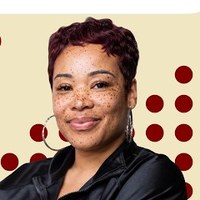
Why Founders Walk Into Impact Rooms With the Wrong Deck
Charney Robinson-Williams, CEO of Noire Impact, opens with a diagnosis that shapes everything that follows: most founders approach capital from a Shark Tank or VC frame. They build pitch decks that optimize for ROI, data, and revenue multiples. That approach is appropriate for one type of capital and actively counterproductive in impact investor spaces.
"Founders that I see typically think about capital from a Shark Tank VC perspective," Robinson-Williams said. "They're going to focus on really illustrating the ROI, return on investment. So drilling down on the data, the numbers, what is this showing? How much money can you make?"
The problem is structural. VC math, as she puts it, demands a specific scale of return. Most early-stage or pre-seed startups are not candidates for VC capital regardless of how strong their deck is. That mismatch leaves a large population of mission-driven founders in a gap: not ready for VC, but unaware of the alternative capital instruments available to them. Noire Impact's core work is closing that gap through education, including Robinson-Williams's free ebook Decoded Dough, which translates impact investing terminology into plain language.
The Capital Stack as a Coordination Tool
Robinson-Williams's primary analytical framework is the capital stack. In her framing, a capital stack is a layered combination of funding instruments that can be assembled around a single company or community project. The stack is not just a financing structure. It is a coordination mechanism that lets multiple types of capital-holders, each with different goals, participate in the same opportunity.
Her example, drawn directly from the conversation, walks through how a climate media company like The Grove could sit at the center of a three-layer stack. An impact investor provides a traditional equity investment, leading with the company's climate mission. That same investor may know a donor-advised fund (DAF) holder who can deploy more flexible capital through a philanthropic vehicle. A foundation contact then layers in a grant, potentially because a nonprofit partner is embedded in the business model or supply chain.
The result: one company, one moment of fundraising, three different capital sources with three different return expectations. Robinson-Williams's point is that founders who only know how to pitch for the equity layer are leaving the grant and DAF layers entirely unclaimed.
Understanding the stack also requires understanding the difference between philanthropy and impact investing. Robinson-Williams draws the line cleanly: impact investing is a traditional investment made with impact as a leading criterion, while philanthropy is donation-based and typically produces tax benefits rather than financial returns. She also introduced the concept of venture philanthropy, which she described as a newer term in her own learning: a model that does not prioritize financial return but still deploys investment-style capital or alternative funding structures.
How Impact Investing Got Its Name and Who Was Already Doing It
Robinson-Williams places the formal coining of the term "impact investing" around 2007, crediting a small group of wealthy pioneers. But she is deliberate about contextualizing that date. The formal term is recent. The practice is centuries old.
"My community has been doing this for quite some time," she said. "I think that's the unique part about Noir Impact. I feel like I bring a different lens and sense of inclusion into the work."
Her examples of pre-terminology impact investing are intentionally accessible: shopping local, giving to alumni funds, reinvesting in the school systems and businesses of one's home community. These are place-based investment decisions made without the vocabulary of institutional finance. Robinson-Williams built Noire Impact specifically because the people deploying capital and the people accessing it have not historically reflected the communities most affected by the problems impact investing tries to solve.
This framing matters for founders. Robinson-Williams is arguing that the principles of impact investing are not exotic or foreign to communities outside traditional finance. The barrier is vocabulary and access, not values alignment.
The Philanthropy vs. Impact Investing Tension Inside the Room
One of the more specific dynamics Robinson-Williams describes is the internal friction within impact investing circles between dedicated philanthropists and committed impact investors. This is not a public debate. It is a quiet pressure she has witnessed firsthand at granting circles and philanthropy convenings.
Some investors who have moved from 100 percent philanthropic capital deployment to impact investing become, in her words, aggressive advocates for the shift. They will show up in philanthropic spaces and argue that grant capital should be redirected into investment structures. Robinson-Williams neither endorses nor dismisses this position. She presents it as a real dynamic that founders may encounter when they start moving across different rooms and different types of capital holders.
The practical implication for founders: knowing which room you are in, and who holds which conviction, is part of reading the impact capital environment correctly. A pitch that lands well with a place-based impact investor may land poorly with a foundation program officer, and vice versa. Robinson-Williams's work at Noire involves teaching founders to read those distinctions and adjust their language accordingly, which is a different skill than building a pitch deck.
Translating Mission Into Investor Language
Robinson-Williams identifies two things missing from most founders' impact pitches: storytelling and fluency in what impact investors are actually looking for. She references the United Nations Sustainable Development Goals (SDGs) as one framework that recurs in impact investor conversations, a signal that founders operating in climate tech, water, agriculture, or other SDG-adjacent sectors can connect their work to a shared vocabulary that resonates in those rooms.
The practical advice she gives is directional: if a climate tech founder shows up at Climate Week in New York, which she describes as a dense environment of impact investing events, they need more than a sector-relevant technology story. They need to be able to speak to the impact criteria, the measurement framework, and the alignment with the capital-holder's values. The pitch deck built for a VC partner at Sand Hill Road will not do that work.
Frameworks from this conversation
- The Capital Stack as a Coordination Tool
- Philanthropy vs. Impact Investing: The Quiet Room Divide
- Decoded Dough: Making Impact Vocabulary Accessible
- Place-Based Investing as the Entry Point for Mission Alignment
Full transcript Click any timestamp to jump to that moment in the video.
-
co- today on the show we have Charnie Robinson Williams. Charie is the founder of Noir Impact and what we get into are the more nuanced aspects of capital of how to fund raise of how to look for grants of how to speak to family offices, foundations, when you should even be thinking about these types of uh
-
resources and really how they're structured and how to align their incentives with yours. all stuff uh as we're familiar with now. I was not knowledgeable about and uh Charna is amazing with her experience in there and helping founders uh navigate this space.
-
So, uh really educational conversation for me, I know it will be for you. Thank you to our sponsors, Clean Tech Growth Lab. If you're looking to grow in clean tech, they are the people to do it with. And the producers of this podcast, Craze and Friends. And with that, I give you Charna.
-
Hello, welcome to another episode of the Grobe. Shout out to our sponsors mentioned just before this, but without them it would not be possible to interview awesome people doing awesome things like Charie. Welcome. >> Thank you. >> Today is a special episode because we get to talk to somebody that's usually behind the scenes, moving, shaking,
-
making a bunch of decisions. Today we're talking a lot about stuff that I don't know a lot about, which is capital, uh, investing. So, I'm excited to learn a lot from you. Before we get into it, if you could give a brief introduction of yourself and what you're built.
-
>> Awesome. My name is Charna Robinson Williams. I'm the founder of Noir Impact, and I love working through capital, culture, and systems, really bringing people together. Um, a lot of that looks like Noir Events. It looks like Noir Capital where we're working with social impact entrepreneurs, showing them how they can access impact
-
investments, teaching them what impact investing is. And then also working with foundations and other wealthers, just really advocating and evangelizing around what impact investing is and how they can align their wealth with their values. A lot of people don't know about that. So because of my time in the impact in impact investing space, I've
-
realized that there are certain people accessing certain funds. There are certain people deploying capital. Um but those folks don't always look like me. And so I developed Noir Impact as a way to kind of bridge that gap. I also have a free little ebook called Decoded Dough. And so decoded dough is just um
-
my way of making sure like impact investing terms is made plain. >> And so like I just want to make sure that whether you are a benefactor to impact investing or whether you are deploying the capital or you're interested or maybe you don't think you're an accredited investor and you can even get involved. I want to make
-
sure that everybody's on the same playing field understanding what it is and also um provide resources for people interested in like alternative capital methods. >> So when you were running around as a little toddler, were you saying I can't wait to get into impact investing or did something happen at some point?
-
>> When I was running around as a little toddler, I was like I can't wait to be a star. That's what I was running around. I definitely did not have impact investing um on my bingo card, >> but that's the funny thing about how the big guy upstairs works. You can make plans and life can take you many
-
different places. Just enjoy the ride and retain the knowledge. One thing my grandmother told me growing up, she's 95 now, like my bestie, and she said, "Once you get it up here, nobody can take it away from you." M.
-
>> And so that was all about like staying in school, doing the thing, getting your master's degree, but also moving and grooving in different spaces, but like downloading knowledge, not always talking listening absorbing and that's something that I had a chance to do. And so my career went from thinking I was going to have a world in uh
-
politics and policy. I was an Eagleton Institute fellow two times um from Ruckers University. I moved to DC. I then got into association work as the director of communication and events. So I actually ran symposia, global symposia for a bunch of crazy protein scientists.
-
>> Um I got to travel the world for free. I lived the high life. It was really exciting. >> So you're a star. So you made it. I was still background. >> Okay. >> But I did get to travel the world and a lot of people can't say that. I did that for free and you know very posh
-
circumstances. >> I met incredible people, people that won like Nobel prizes and finding cures to many things and I would lead their like conferences essentially. Like that's what a symposium is. And so I was there for 10 years. I did a full bid. Okay, that's that's a long time.
-
>> Uh, and I loved it and I grew, but I hit a glass ceiling and it was the pandemic. And then I had my second child during that time. You and I have been talking over the past couple of weeks and you know, I'm a mama bear and I'm always like talking about my children one way
-
or the other. And so one thing when you have kids, and if you're a parent out there, you probably can attest to it. When you become a parent or a mama bear, the level of the threshold of nononsense is very minimum.
-
>> So I was like, I'm a mom times two. >> It's a pandemic. I've hit a glass ceiling. Yes, I can travel the world. Yes, this is great. I was like there for 10 years. So the work was easy. I could do it with my eyes closed and I was doing my job at a very high level.
-
>> But the glass ceiling was there and I'm like I need to grow. >> I need to make a coin. >> Um but also I need to be in a space that feels supportive to my growth, not stunting it. And my kids can't afford me to just be complacent.
-
>> The world is like going through this weird thing right now called the pandemic. There has to be something more. So that was actually the first time after 10 years that I actually wanted to like look seriously for another job. And I did. I found this organization in Philadelphia that was talking about placebased impact
-
investing and how the job that they posted was for someone who loved people, someone who had experience with events, and someone that could build community. I'm like, >> you said Charie. >> They must be talking about me. Um, and also this sounds like an amazing job. It sounds like Disney World. Like you get
-
to do good. You get to talk to people about investing in like good things in their values in their community because it was placebased. So that meant they were looking for more investors to invest back into Philly. Philly is where my family is from. And so I felt that connection and that through line there
-
and I applied for the job and you know knocked it right out the park. That's right. Like the interview was so butter. It was >> it was great. So, uh, something I'm curious about though is when you were at when you were at that level, uh, when you were traveling the world, when you
-
were meeting people, uh, Nobel Peace Prize winners, things like this, was there any type of discussion around impact investing even if it wasn't using that vocabulary? Like, had you been introduced to the concept before uh, this job or was this really the first time that it that it put it into such a
-
concept? This was the first time that I heard the term when I was in the scientific STEM space more directly. Um, we did invest as a nonprofit. I had been around for like over 354 years. You know, we did invest. Uh, but it was just like your t typical investment portfolio.
-
no one was talking about aligning with their values and the organization itself at that time DEI wasn't even really a thing like we were doing um some inclusion work I remember bringing that to the organization but it was still new at at that time when I was like at the association for 10 years and so when I heard about
-
impact investing I had to do my research I had the interview and then I realized like oh Actually, my community has been doing this for quite some time, and I I think that's the unique part about Noir Impact. I feel like I bring a different lens and sense of inclusion into the work and
-
into the space of impact investing cuz I think there's room for everyone to play, but you don't hear about that as often. But impact investing, I think, officially may have been termed in like ' 07. >> Okay. So, it's relatively new. Um, and there were like a few pioneers that kind of wealthy folks that kind of put a
-
name on the thing. >> But I feel like for centuries, people have been doing some form of impact investing. And when you drill down a bit more to place-based investing, >> that's as simple as saying, "Shop local, shop smart." you know, I want to support my local business or you're an alumni and you're giving money back to the
-
universities and the schools and education systems in your community or where you're from, right? So like that's a more watered down version >> of it, but the principles remain the same. Are there are there any so this question comes from a perspective of I've personally always had a general compass towards things that did good or um things that
-
were ju I guess generally in that idea of doing good and then as time went on it became more specifically climate and and all these things but impact investing to me um I've talked to a number of people, you know, in my life about it. And uh different people have different definitions of what it is. And
-
some people even think that uh having such a specific uh term around it or things like this is is negative or it's it's like the whole thing about uh you know trying you know backlash around like DI initiatives where they were saying it's actually more discriminatory or things like that. um which I don't
-
agree with but what do you being that you're in the space to this capacity are there any misconceptions about what impact investing is and are there any similar uh spaces of of backlash to the concept or to initiatives um of impact investing um well I think I don't really run because I'm in the
-
space. I don't really run into many people that have like negative thoughts around impact investing, but I do think in the space it's there's this quiet rumble or tussle going on between philanthropy and impact investing, >> philanthropist and impact investors. So you'll see folks that are really diehard wealthy individuals who have transitioned from
-
like 100% philanthropic work and move towards impact investing. and they feel very strongly about that being a systems change piece of the work and that you know people shouldn't continue to put as much capital into philanthropy and they should start investing it. So, you'll have people that go hardcore and like they'll show up to these like
-
granting circles or philanthropy circles and are like, "You shouldn't be do you're you shouldn't put your money here." You know what I mean? Do that. And like I' I've seen it happen. It might sound crazy, but people can become really aggressive about it. Well, I guess I guess to to to follow that, I
-
guess a more concise way of asking the question is why isn't everything impact investing? Like why doesn't everybody do that? >> There's a thing called a capital stack and I think capital stacks um can be very catalytic for uh companies and communities. So, a capital sack essentially is some somebody that offers a grant or some type of other
-
alternative financial model on top of an investment. So, for example, the Grove >> now is um a for-profit entity. You have a climate change perspective and impact that's your lens and an impact investor is like I want to invest in your company. I really see you growing at scale.
-
They can give you a traditional investment where they are leading with your impact because you're doing good for people planet um place right but they might say I have a friend who has a daff right and so with the daff they can do some different things >> a donor advised fund >> okay And so
-
you can invest with your donor adise fund, but a lot of people have been running philanthropy through their donor advice fund. So that's something where you can kind of pull creative um capital from there's more flexible capital. Then they might say, "Oh, you partner with like this nonprofit or maybe you have maybe the Grove has a
-
nonprofit or maybe you don't have a nonprofit, but you partner with a nonprofit that's a part of your like business model." So now they're like, "Well, I know a foundation >> that's a friend or that's whatever." And they connect you with the foundation who's like, "Well, if you're making this investment, I'll give them a grant."
-
Interesting. >> So now you have a grant, a traditional investment, and you have some type of creative capital model coming out of someone's staff. >> So, so is the difference between impact investing and philanthropy is that impact investing is like you're saying a traditional invest traditional investment just in this space of doing
-
good and then traditional philanthropy is just donationbased where you have tax write offs. Is there anything else that differentiates them? >> No, that's it. So, like there is this thing that has been around, but quite frankly, I just found out about it called venture philanthropy. Have you heard about that before?
-
>> No. So much of what you're saying, I haven't heard of before. >> Well, I don't want to sit here and say I'm an expert at venture philanthropy because I really just started hearing it more frequently. >> Okay.
-
Venture philanthropy doesn't seek a financial return as the primary piece of it, but they are giving investments or doing some type of alternative capital models. I know you don't work specifically in the climate tech space, which is completely fine because uh like I was telling you on the phone uh a couple days ago is that a lot
-
of what you're speaking to, even if we're not using the words climate tech or deep tech or desalination or any of these things, they still apply to climate tech founders to my understanding. like a lot of these resources are available to climate tech founders and uh a lot of people just don't have the knowledge of um to seek
-
these things out. So the first question I have is from a founders perspective and you could absolutely draw from uh the experiences that you have with founders at noir. How how do founders typically think about capital and then how should founders typically think about capital?
-
>> Founders that I see typically think about capital from a Shark Tank VC perspective. They think about it from a lens of seeking an investment from traditional investors. And so when you are in business school, when you are in an accelerator program, they're going to teach you how to build out your pitch deck.
-
>> Mhm. >> And they're going to focus on really illustrating the ROI, return on investment. So drilling down on the data, the numbers, what is this showing? How much money can you make? And I'm not a VC investor. don't claim to be. Um, but what I do know is VC math is insane.
-
You have to make a lot of money. So, if the math is not mathing, you might not be a prime candidate for VC funds. Most early stage startups or even preede startups are not ready for VC capital. So what does that mean? They still need some type of capital, right? To get to that
-
level. Going back to what is taught, founders are just simply working with their traditional pitch decks. And that traditional pitch deck is not going to take you very far in impact investor spaces because it's lacking some key components that speak their language.
-
And so one of the things that we focus on with noir is like storytelling, but also it's under it's education and understanding what are impact investors looking for, what what's in it for them. um what are some key terms or what are some key things that you need in your pitch deck that you may not need in a
-
traditional pitch deck. If you end up in a situation where you're at New York um you're at climate week in New York, >> right? I used to love to go and there's a ton of impact investing events during that time.
-
So you pull up to an event and you're talking about your company. Yes, it's climate tech. So that's going to get you in the door. Like just the fact that it's climate, right? So that's already going to help you.
-
>> But besides climate, I'm sure there are other impact lanes that your business might cover. >> Sure. But if you don't know how and what impact investors might be interested in, you don't know how to tell that story because you're just going off of your traditional pitch.
-
Um, so just kind of delving into that, I'll I'll share a bit of what I some tips that I always talk to founders about. When I was working with investors, I worked with investors from a peer um lens, meaning I helped them find out how and why they want to do good and align their values with
-
their capital, right? So, it's all about a journey. Um, but it's also about connecting them to their community. And often times I was working with folks that were new to impact investing and one of the things that we always did was a put them through like an education series. So they would actually learn
-
what impact investing is, how that's different from traditional investing and everything in between cuz it's a wide scale, right? But then we would drill down and we would ask them, well, what is your impact thesis? Because everybody wants to do good. Good is in everything. But you can't not everyone has the funds even if you are
-
ultra high net wealth individual to just like give your money spread out across everything right >> so we asked them to come up with their impact thesis one of the ways we did that is through SGS so you want to look at the UN's SGS and ask them like what speaks to them
-
>> is this sustainable development goals >> yes it is >> okay >> and so Most impact investors in their head have categorized the type of impact that they want with STGS. I highly recommend any social impact entrepreneur that's interested in accessing impact capital to figure out what STGS their company touches.
-
And from there, from that assessment, try to drill down to three or less, include that in your pitch deck. Because when you talk to some impact investors, they could be savvy, they may not be savvy, folks don't have the time.
-
You hear that from traditional investors, but if you can very quickly like say, "Oh, SG-13 or you know, SG5, whatever the case is, I cross these STGS." They're automatically like, "Oh, this is in my impact thesis." >> So, when we're talking about impact investors, we're not just talking, we're not talking about VC necessarily. We're
-
talking about the types of family offices or businesses that work with family offices to fund VCs. So instead of going to a VC and then going to a founder, we're talking about that family office going directly to the founder or that family office going to a foundation and then the founder.
-
>> Okay, let's talk about the journey of how you can access the bag. So >> nice. >> For impact investors, you can and let me take my glasses off for this. >> Oh, okay. >> Okay. All right, we're into something.
-
For impact investors, you have the wealthers. That might be someone that runs a family office, traditionally multi-generational family office. Let me tell you a little bit about that. You want to find the family offices that are already 10 toes down into your impact investing lane. The reason why I say it can be hard for some
-
founders to access capital from a family office, especially if it's leading with impact. Um, from my experience, I worked with a lot of impact investors who came from multigenerational, you know, families. They had a family office and they were kind of like sneak investing meaning the family they're not with most of the time they're family
-
offices are not 100% into impact investing. >> Fascinating. >> Most of the time it's run by financial advisors who have been with the family for multiple generations and that's a tra traditional financial adviser. traditional financial advisors are most concerned about their fiduciary responsibilities, which is to make you the most money. Um, and so if they are
-
not familiar with impact investing, the assumption is that you're not going to make the most money with impact investing. That's a myth. You can still get considerable amount of financial returns with impact investings, but but also you may have some concessions, but that's up to you to decide in terms of what you want to invest in.
-
>> That being said, you have folks that are in these family offices that have something called a carveout. So because they want to go rogue with making money in the traditional sense, the family has said, "Well, we're going to give you 5 million to play with, 25 million, whatever it is, but it's a
-
carve out." >> That's a lot. >> It's a lot, but it's a carve out. Like this is your play money. >> So you want to go ahead and impact invest. Okay. You want to dwindle it away. Okay. That's the assumption.
-
That's not what happens. But the families are like, you're kind of going outside, you're coloring outside the lines of what we know has generated income for us >> um for for years. >> Okay. >> Um and so these impact investors usually create a donor advisor fund around their passions or they have this carve out and they'll
-
do their own individual impact investing. So I say all that to say that like if you are going after family offices in a traditional sense, make sure they are on their website leading with the impact. Otherwise it could be an uphill battle.
-
>> Okay? >> Or find someone within the family office, a family member who cares about your particular issue or impact lens, which would be climate tech. Now they as an individual can use money from their carveout likely or from their dad or whatever. Um you also have foundations.
-
This is what I think is like a new level unlocked. A lot of people go to foundations for grants cuz it's a nonprofit and they do philanthropy. >> But I am a trustee of the Valentine Foundation right here in Philadelphia.
-
We do missional aligned investing. We are almost 100% mission aligned with our portfolio. Super excited about that work and what we've doing. Super excited about Vanessa Low um who really helped the organization kind of come into into this world and into this space. And there are a ton of foundations across the country,
-
really around the world, that are doing impact investing. So you can go to certain foundations, figure out what their mission is, how you align, and you can solicit an investment >> or if they don't take solicitations, you can figure out how do I get into their pipeline.
-
Um, but don't just think foundations give out grants and that's it. Some foundations also invest. >> Is it is it going to be uh on a foundation's website if they do invest as well or is it something that is just, you know, there'd be there' be a foundation, you know, they have the
-
regular thing like, oh, we do all these projects. Here's some things we've invested in and it's worth reaching out anyway because they might have an investment fund that they're just not. >> Yeah, that's a great question. I know the Valentine Foundation, we are loud and proud about our work with Mission Align Investing. Um, and our executive
-
director also does a lot of advocacy work around getting other foundations involved in impact investing. Um, so we have it on our website. There are some that have it on their websites. I would say and I'm really giving you guys all the goods but um >> there is an organization called mission investors exchange MIE and it's
-
essentially an association for all the foundations that are doing impact investing. So if you want of course you can just ask claw chapg give you a list or you could go to mission investors exchange website >> and I don't know if they tell you all of their members but they definitely >> that's what Char is for.
-
>> They definitely tell you a good chunk of them or you know you can just do some due diligence and figure it out for Are are these conversations with these types of investors different at all than the traditional like hey here's my business model here's a return uh here's where I fit things like this you
-
know >> well I can say from my experience at the Valentine Foundation you know we still want to see ROI we still want to see >> the business case so you still have to have that but what we're also asking that some folks don't always have prepared is we're asking for you to really tell
-
us what the impact is. So I recommend all social impact founders to have an impact slide in their pitch deck. >> Now you can hide this slide when you go to the traditional folks or I suggest keeping it in there. Um but have an impact slide that really outlines the STGS that you cover
-
>> your impact. you really want to get that storytelling together for moments when you're in front of impact investors or in front of mission align um investing foundations. Um and I will say what's going to set you above everyone else is if you can prove that the impact is a part of your business case.
-
>> What do I mean by that Charie? >> Yeah. Well, sometimes you're a social impact founder and you are doing good because it's a piece of the work. Maybe you're giving back in some way or you're serving like a a underrepresented community. But what you really want, you want to be able to measure your impact.
-
And when you measure your impact, you want to be able to say when I have more impact, you also see more revenue. >> You want it to be one and the same. You don't want it to be like, well, when we have more impact, oh, revenue wasn't really that high.
-
So if you truly want to be like la creme the la creme of of it all your impact should be a part of your business your business case. You should be able to say you want me to do more impact. you want me to serve more people in these communities or you want me to
-
have >> clean tech solutions >> because every time this happens and the world becomes a better place, you're also making like a lot of money. >> I I am jealous of everyone that just gets to watch and absorb all these things cuz I'm here and I'm just like but then I have to prepare more
-
questions. No, but this is seriously I mean I there there's nothing to say really about all that you're uh all that you're teaching right now because I think I've never had any conversations about I've talked to a lot of investors and talked with a lot of founders and a lot of corporate buy a
-
lot of people in this space and nobody is talking about this type of stuff. So uh first of all I want to thank you because this stuff is super important. Uh in the interest of time I have three uh rapify questions for you. um two uh are my favorite and they're the shorter
-
ones. So you could take this is part of your mission statement so you can take as long as you want to answer this but at the beginning uh you had said uh noir impact is specifically oriented towards people um that look like you because there aren't a lot of people in this space that look like you and we talked
-
about there are barriers and being a founder being in entrepreneurship being in impact is hard to begin with. Um, but being a woman founder, being a founder of color, uh, in any of these spaces, climate techch even more so because there's it's very heavily uh, technical engineering, a lot of these are male-dominated.
-
>> Um, what additionally would you say to a younger founder that is uh, watching this uh, and maybe they are a woman founder or a founder of color. Are there any specific barriers that um you know in addition to this lack of just general knowledge of how the space works um that you would say to them?
-
>> Well, I don't think anyone coming from an underrepresented background needs to hear more about barriers. I think that that's a part of the journey unfortunately in this moment. But what I would say for all of the founders or aspiring founders to not count themselves out and as much as possible push yourself in rooms
-
whether you're the only one there or not, put yourself in rooms that you wouldn't normally be in. try to really focus on what you're bringing to the table and focus on relationships. I think that's kind of how I got to where I am today, just based off of being open to being in new spaces, in
-
new rooms where I'm learning new information, but also holding relationships that are not necessarily transactional. Sometimes the value is in the conversation. Sometimes the value is in the connection. It may not always result in capital exchange immediately. I will also say my ethos is that of Shirley Chisum. And so she said something like if they don't give you a
-
seat at the table, bring a folding chair. And that is truly how I've been operating in these spaces. back when I was in protein science working at an association for over 10 years around incredible people in new spaces. The only black woman, the only young person um or when I came into the impact
-
investing space, it's like don't be afraid to show up. You don't always have to be the loudest in the room. You don't always have to carry the conversation. Great if you do, but a lot of value can be there to observe, listen and absor absorb and then just leverage that to the best of your ability in later
-
spaces. But also like don't forget to help someone, you know, reach one, teach one type of vibe. That would be my advice based off of my experience. M so uh so off of that um how much of the uh the work that you're doing at noir impact um is is specifically around those things but
-
growing uh your own business talking about all of these uh this knowledge and stuff what is the biggest hurdle that you uh that you experience at the moment and how is it also an opportunity >> I think the biggest hurdle at the moment moments is we're in a world of social media and you know everyone's a marketing
-
queen or king and I traditionally have like never marketed my company. I've never had to. Mhm. >> I'm in the tech space and I just revamped my website. And honestly, that's because a founder was like, "Look, your website's trash. Let me let me do this." >> Whoever did it. It looks awesome. So,
-
>> um, shout out to Peter. >> Shout out He did it. >> Shout out to Peter. Tycoon agent. >> Oh, no way. >> Tycoon. Um, >> that's great. >> You know, but >> take a look at my website next. Sorry.
-
>> Yes. So, I have been blessed with referrals and just people word of mouth and an opportunity for multiple streams of revenue and income because, you know, I'm a mother. >> Mhm. >> And I told you earlier once you have kids, you're like, I got to tighten up.
-
>> So, for me, it's an outlet. It's a it's a way to give back. is also a way to you know help create income for myself but um I have been hearing that I need to do a better job with marketing >> and so the opportunity that exists for me in that is that I get a chance to
-
work with different tech founders um also explore new tech platforms and things like that go a bit deeper and um my learning but also I'm meeting folks like Peter who is a tech founder but also a PR guru and all the things I get to meet people learn their stories and also support their businesses because of
-
you know my hurdle at the moment >> I'm an auntie >> and so I'm a little bit behind the times with everything >> opportunity though. >> But there is an opportunity there and and with that opportunity, I'm learning new skills.
-
>> I'm meeting new founders >> and then hopefully it will attract and generate a new audience and more income. But I've been doing just fine off of like word of mouth. So >> nice. >> Yeah. >> Well, it doesn't surprise me. I mean, you do insane insanely great work. Uh, and I've only heard awesome things about
-
you from other people. So, >> what you once you've been here once you've been here? >> Well, I talking about Peter. Like I said, me and Peter had a whole combo about literally all this, you know, you're just so uh so generous with all of your knowledge and you are tapped in and you're uh taking all this knowledge
-
and sharing it with people that could really use it. So, that's what I've been hearing. And my last question for you uh just because all this is so uh inspiring to me is what inspires you? >> What inspires me? Well, my grandparents inspire me.
-
>> Particularly my grandfather. >> He passed away a few years ago. His name was John Gray. Johnny Boy. That's my guy. He was a serial entrepreneur. Um, but prior to that, he was from North Carolina. He worked tobacco fields. He had a fifth grade education cuz he could only go to school when it rained outside and he
-
couldn't be in the fields. >> Went to Phil like did the great migration, all that kind of stuff. Went to Philadelphia, worked in a factory, got laid off one day and was like, I'm never working for the man again.
-
and he made that promise, became a serial entrepreneur and like killed the game across industries. Um, now was he super savvy? Like, no. >> Did he know and trust banks? No. >> Mhm. >> Am I a trustworn baby? No.
-
>> But he gave my entire family an insane work ethic. He always believed in me. He was hardcore with everybody except for me. >> He always trusted my instincts even as a young person. And I just know that he would be so proud of me right now. Um I think about him often.
-
>> But I also think about the legacy that he left that came out of hardship that came out of those hurdles. That's why I say, you know, we really don't have to spend so much time on discussing what the hurdles are and the challenges because I come from a people in a community. Um,
-
and I have a DNA that allows me to with the strength of God, of course, persevere, overcome, make it happen. I've seen it time after time, generation after generation. So, I feel good about where I'm going. He left a legacy of hard work ethic.
-
>> He also left a legacy of entrepreneur um entrepreneurship, serial entrepreneurship and he left a legacy of holding your family down. And so that is where I'm at. That's the type of time I'm on. I am all about working hard, getting a coin, having multiple streams of revenue, but most importantly holding the family down and like making
-
sure that like what I have up here, remember what we said grandma said earlier, what you have up here, nobody can take it away from you. >> So, it's my job not to hoard information. Mhm. >> God put me into these spaces with incredible people, impact investors, super rich people.
-
Like I mean, I'm not trying to say Illuminati level, but stuff I've just never seen before. >> Yeah. >> Right. And so, hey, if there's a way that I can help someone just with what I've learned, >> I will do that because it's important that not just my community, but like moving humanity
-
forward. >> It's it's really important that I don't hoard this information. So, that's what I'm here for and that's why. >> So, with that, shout out to John Gray. >> Shout out to John Gray. Thank you for contributing to uh the person that Charna is today and thank you so much for this conversation for this time. I'm
-
going to be watching it a thousand times over. I'll be doing all the things that you said to do. But um but yeah, that's our timer. So, thank you and uh I'll see you on the next one. >> All right.


