
How Water Startups Succeed | Katie Kollhoff, Innovation Programs Director @ The Water Council
Katie Kollhoff Moad explains why water startups face a fragmented market and how The Water Council stages commercialization around TRL 3 to 6.
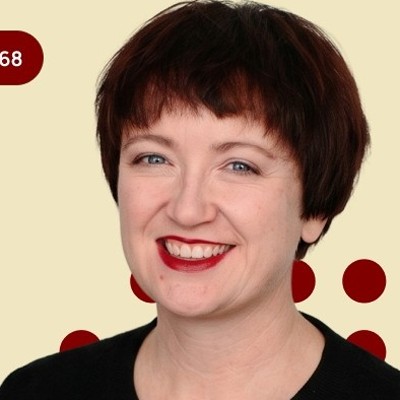
Katie Kollhoff Moad's founder lens starts with risk, water, and market fragmentation
Katie Kollhoff Moad brings an operator's view to water innovation because her career moved through chemical engineering, process safety, university R&D, and company formation before The Water Council. She framed her current role plainly: "my name is Katie Kolhoff Moad. I am the innovation programs director at the water council which is a 501c3 nonprofit based in Milwaukee but built for the world to advance freshwater innovation and water stewardship," Katie said.
That path matters because her mental model begins with risk. In process safety, she built a practical map of how industrial systems fail, from food processing to specialty chemicals. At Northwestern University, she shifted that lens earlier in the technology cycle, applying safety and technical readiness thinking to R&D. Her startup then placed her at the intersection of hazardous waste and water.
Her central diagnosis is that water founders rarely sell into one clean buyer category. Katie said the sector is "hugely fragmented. it usually exists as a water component in other industries rather than a unified market if you will." She then named the internal splits: industrial water, wastewater treatment, drinking water treatment, stormwater, and green infrastructure. For a founder, this means category definition is commercial work. A company has to know which water problem it is solving, who owns the budget, who feels the pain, and which proof standard matters.
Katie's framework can be read as a market segmentation discipline. The founder cannot treat water as a single channel. The first job is to locate the buyer's operating context, then fit the product proof to that context. A monitoring tool for industrial discharge, a treatment process for municipal drinking water, and a green infrastructure solution all face different trust barriers, sales cycles, data needs, and procurement rhythms.
The Milwaukee cluster converts beer infrastructure into water market access
The Water Council's origin story is a case in place based industrial strategy. Katie traced the logic back to the late 1800s, when German immigration and beer making shaped Milwaukee's industrial base. Beer required large volumes of water, plus the equipment to move it, heat it, stop it, start it, and treat it. That supplier base expanded into food, beverage, dairy, and water treatment capability.
About 15 maybe 20 years ago, Wisconsin leaders recognized that the region held an unusual density of water technology companies. Katie's explanation is practical rather than romantic. Milwaukee had capabilities, customers, technical talent, and a shared freshwater identity because it sits on Lake Michigan. The Water Council formed to make those pieces easier to combine.
The useful framework here is cluster intelligence. A cluster does not work merely because companies are near each other. It works when someone maps adjacent capabilities and turns hidden fit into transactions, pilots, referrals, lab access, and shared learning. Katie gave the example of two founding member companies. One worked in drinking water, another in hot water heaters. Each was sending samples out of state for testing while the needed capability existed nearby. The market failure was information, not technology.
That is where The Water Council acts as connective tissue. Katie described the organization through the language of matchmaking, citing executive director Karen Frost: "I'll talk about our executive director Karen Frost who describes the water council water council as match.com for water and um is an unparalleled matchmaker," Katie said. The phrase is memorable because it captures a specific operating role. The Water Council helps firms see who they should know before they already know to ask.
The Water Council's stage ladder separates prototype proof from Brew 2.0 growth
Katie's programs are structured around startup maturity. The earliest companies may be around TRL 3 through six, where the challenge is matching technical promise to sponsor defined problem statements. Later companies enter programs such as Brew 2.0, where early sales exist and the core question becomes business growth.
Katie summarized the structure this way: "we offer innovation programs that are across different stages of um of technological readiness or a startup life cycle." That sentence is the operating model. The Water Council avoids treating all startups as if they need the same help. A prototype stage team needs problem validation, technical feedback, customer context, and proof design. A company with early revenue needs channel clarity, reference customers, procurement literacy, and repeatable sales motions.
This stage ladder is especially useful in water because trust accumulates slowly. A startup selling into infrastructure, utilities, or industrial operations has to answer more than whether the technology works. It has to show what happens during downtime, how maintenance is handled, whether results hold under variable influent or operating conditions, and how risk is allocated between buyer and seller.
Katie also places unusual weight on engaged incumbents. In her view, innovation programs require members who say yes to participation, feedback, and access. Without those buyers and technical partners, startup support risks becoming advice without market contact. The Water Council's design pulls corporations, utilities, and other water stakeholders into the same frame as founders.
Sponsor pulled pilots change the first customer problem
The episode's most practical go to market insight concerns pilots. Blake Newcomer raised the difficulty of converting pilots into commercial contracts, a recurring issue in infrastructure markets. Katie's answer clarified how The Water Council thinks about pilot design.
The organization often works before and after the pilot stage rather than trying to force every company through the same pilot funnel. Katie said, "we occasionally have pilot opportunities and we'll put out a call for those specifically." The key distinction is demand signal. She explained that those pilots come from a sponsor with a defined need, instead of a startup pushing a solution in search of a test site.
That distinction creates a better pilot frame. A sponsor defined problem statement gives the startup a clearer buyer, a clearer success condition, and a clearer path to what might happen after the test. When funding is tied to the opportunity, the pilot also avoids the trap of asking early companies to absorb all deployment cost. Katie noted that "there's funding associated with an opportunity" and that "the materials and time to kind of put it together and get it up and running is covered" or the sponsor pays part of the bill.
The broader framework is simple: pilots should begin with a budget owner and a problem owner. If a test exists only because a startup needs validation, the next commercial step can be vague. If a sponsor has named the need, helped define the test, and paid for part of the work, the pilot has more commercial gravity from the start.
For water startups, Katie's playbook points to three questions before chasing a pilot. Which water segment owns the pain? Which sponsor has already named the problem? Which proof package will move the buyer from technical interest to procurement action? The Water Council's role is to make those questions answerable earlier, using Milwaukee's cluster, member commitment, and staged programs as the operating system.
Frameworks from this conversation
- Water as a fragmented component market
- Milwaukee beer infrastructure to freshwater cluster
- TRL 3 to 6 plus Brew 2.0 stage ladder
- Sponsor pulled pilot design
Full transcript Click any timestamp to jump to that moment in the video.
-
Oh, today on the show we have Katie Koloff. Katie is the innovation programs director at the Water Council, which is an organization in the Midwest that brings together a bunch of water technology. It's much more complicated than that, but I I feel like if I went into details, it would miss the point
-
that they are just a massive organization in the Midwest as far as their impact goes. And uh they do a number of different things. mainly they run these uh three programs for water technology companies at different stages that we'll get into details about with Katie. Um but they really are uh an accelerator for uh innovation in water
-
uh in the water industry if you could even call it that. Uh so it was a very educational uh and fun conversation for me as an ecosystem builder because that is what the water council has successfully done. So, uh, thank you as always to our sponsors, Clean Techch Growth Lab. If you're looking to grow in
-
clean tech, they are the people to do it with and as always the producers of this show, Craz Friends. And with that, I give you Katie. Oh, welcome to another episode of The Grove. Shout out to our sponsors just before this, but without them, it would not be possible to interview awesome people doing awesome things like Katie.
-
Welcome. >> Thank you so much. Pleasure to be with you. >> What's happening? So, today favorite topic, water. So, before we get into it, uh, if you give a brief introduction of yourself and what you're building. >> Yeah, absolutely. Uh, my name is Katie Kolhoff Moad. I am the innovation programs director at the water council
-
which is a 501c3 nonprofit based in Milwaukee but built for the world to advance freshwater innovation and water stewardship. >> So how long have you been doing that? >> I've been at the water council for just about a year and a half.
-
>> And and when you were younger were you walking around you say I can't wait to work at the water council or did something happen? Um, no. I um I uh have a degree in chemical engineering and I really came by that through a passion for um for environmental issues. I remember when I
-
was visiting colleges as a you know as a naive teenager um talking with the chair of the chemical engineering department that I later attended who said you know you could learn how to clean up environmental issues after they've already happened or you could prevent them from happening in the first place.
-
And so and I was sold and so um so that's how they hook you and then you and then you're in um but I uh yeah studied chemical engineering and then uh went kind of in a strange path for the first part of my career which was right into um process safety management look which
-
looks at risk um factors for eliminating um spill chemical spills to the environment or energy releases to the environment and that kind of a thing. Um and I did that across food processing like tin think tiny scones or baking mixes all the way to specialty chemicals and kind of you know built this um mental map of what risk
-
looks like in industry. Um and then fast forward some number of years I I took that sort of mindset and I wanted to apply it at an earlier stage. So instead of looking at established technologies uh you know,000galon reactors or whatever it is looking at what's coming out at the forefront. So I
-
um took a role applying those same fundamentals to R&D uh at Northwestern University where I also got a master's degree and um met some people who would become my co-founders in a company that worked at the intersection of hazardous waste and water. That's kind of how I fell into water totally accidentally.
-
>> So you and and you can choose any one of those uh those experiences. So now obviously you're you're doing um uh this this work at the water council and it's different than uh the three things that that you just mentioned but any one of those particular interest in in the founders story uh what what did they
-
teach you about what water technology means or what uh what the water industry is these >> yeah I mean in the first two non-existent was the answer um but in that third that um founder story. We we really got the opportunity to dig in. Uh we founded the company in 2018 and so
-
that was before what this current wave of interest in water startups is bit more nent at that point in time. Um and what did it teach me about what the water industry is at that point and even to this day hugely fragmented. it usually exists as a water component in other industries rather than a unified
-
market if you will. Um, even within like the water industry itself, you've got industrial water, you've got waste water treatment, you've got drinking water treatment, you've got storm water and green infrastructure and the fragmentation makes it difficult to build to build a cohesive market. Um, but I'm hopeful that that's changing.
-
>> Yeah. >> Yeah. So, a number a number of the the conversations we've had on the show with founders or investors about uh about what you're speaking to, which is the water industry. A lot of the answers there, well, uh, you know, there's agriculture, but there wouldn't be agriculture without water. There's, uh,
-
you know, mining, but there wouldn't be mining without c without water. there's oil, you know, all these industries are are really like water's at the base of it. So, it's you can't really say like the water industry like you're speaking to. It's really just uh something that exists fundamentally in almost every single thing that exists on the planet.
-
So, with and and and so it's cool that that uh that you share that perspective. So, so with that, what what was it like for you to found a company? I guess uh had you always in the Yeah. Same in the same way with the water council. Had you always imagined yourself a founder that
-
you were going to do entrepreneurship or or did something happen where you said this is this is the direction? >> Yeah, it was kind of an interesting um coallescence I would say. I was working closely with um with a a classmate at that point in time who um found we had a really complimentary working style like
-
workflow with another person which was pretty new to me. I don't think I'd ever experienced that before. But so we took this approach that we would continue testing building a relationship that could possibly turn into a company formation.
-
So we systematically tested different aspects of how we worked together and how we worked with other people and then landed around landed at this idea which mapped neatly onto the intersection of my background and his background and our capabilities. And so we thought, well, there is no time like the present. Like if we don't if we don't do this now,
-
we'll never know and there may not ever come around a chance to do this again. So um so you know, it was u sort of a naturalish next step. I don't know if it's ever natural to dive into the deep end like that, >> but we were we were really interested to explore
-
um what it you know what it means to to build that entire organization to build that entire value proposition and and sort of um think in 4D about what that looks like and how to build something that needs to respond to changing external variables constantly. Um yeah, and so never thought that I would.
-
Very glad that I did. Um but yeah, um would would recommend to anybody who who has entertained the thought if they're in a a position to to accept the risk to to give it a shot. Well, so so so you so you take that that experience and then um was there anything in between in
-
between start launching that company and then starting at the water council? >> Yeah. So we wound that down and then I took a a break for some family stuff and then when I was ready to start looking around again, I noticed that the water council who I had intersected with a bit during the the time of the company was
-
looking for someone in this role. And I thought, well, I have pretty deep founder empathy. I uh and I I know my way around this industry more or less, so why don't I give this a try? So had great respect for the folks at the water council, the reputation that they uphold and just
-
thought, you know, this could be a fit >> nice and obviously was >> and it was and it's and so pleased so pleased that it is. So, so to give some more context, what what is the water council's role in the water industry? This this this idea of of advancing water.
-
>> Yeah, absolutely. So, I'm going to give like a quick twominute backstory about why the water council is >> and why this geographic region um spawned something like this. So, thinking back to the late 1800s, uh, a lot of German immigration in the upper Midwest, specifically in the Milwaukee area, and lots of beer making. And so,
-
uh, what do you need to make beer? You need lots of water. You need to move it around, heat it up, turn it on, turn it off. Um, and so an industry sprang up around that, around supplying the things to move and treat and heat, water for for beer and for food, food and
-
beverage, dairy and so on. And so um and so that legacy continues to this day. And about 15 maybe 20 years ago um when the sort of the state was looking at well what what is remarkable about about Wisconsin they landed on this realization that there are more water technology companies headquartered or
-
with operations in that area than anywhere else in the world. And so you know makes sense bordered on Lake Michigan. Uh so this you know industry kind of already existed and the water council came together to to you know make the whole greater than the sum of the parts.
-
So one great example about how this has worked is that um one one company who was a founding member works in drinking water. another company who is a founding member works in hot water heaters. And they found out in conversation with each other that the drinking water company was sending their hot water samples to
-
like North Carolina for testing and the hot water company was sending their samples to Texas for testing. So they had the cap the capabilities that each other needed in house but weren't leveraging them because they didn't know about them. And so the water council provides that sort of that cradle for people to um to meet to connect and to
-
to develop and explore economic opportunities that may not be recognized otherwise. >> So so the so this uh this area I mean I didn't know about the that backstory so I'm glad I do now. But I knew I knew that there's a ton of water technology coming out of you know uh the Great
-
Lakes region Chicago and and Midwest and things. So, what what are what is the space like? Because I think um the water council to me, which is why I was really excited to this episode, is an ecosystem builder and like you said uh you know tries to bring people together, create uh economic opportunity
-
through meeting and being a bridge and things like that. And there are a few other organizations that do similar but not the same things. And so it's and so from from someone like you who's looking at it from you know this far >> um you know what what what does the ecosystem look like and and why has it
-
like what makes it work because from my perspective it's definitely working you guys are doing a great job. So what you know what are the aspects to that? Yeah, I mean I think one of the things is our is our member base like the the people who uh commit to being part of this network
-
are committed to elevating freshwater innovation and stewardship and I think without those people saying yes it doesn't work. Um I think any any ecosystem that works with innovation needs that critical mass of yaysayers to to jump in and say this is something that's important. So for instance, you know, I think one of your earlier parts
-
of the question was was how does it work? So we offer innovation programs that are across different stages of um of technological readiness or a startup life cycle. Some all the way back as early as as prototype stage and some that are looking more at um our Brew 2.0 O program looks at how do companies with
-
established um products with early sales who are looking to grow how do they build their business out around that? So we we couldn't do that without interested engaged stakeholders who truly believe that water innovation is how we get from where we are to where we're going. So that's that's definitely part of it. Um
-
the programs that I just mentioned are another way where we invite startups from across the globe in to see what we're doing to engage with our with our members and to um have the opportunity to to be part of the conversation.
-
So uh the members, the startup community and then um I mean I would say the people we have a we have a really um passionate team who uh I'll talk about our executive director Karen Frost who describes the water council water council as match.com for water and um is an unparalleled matchmaker.
-
she just she knows she she sees the whole map of who is who is in water and how those benefits play out with other connections. Um and so I mean I think the people aspect can't be overstated. So, so if we're talking about uh I mean you only mentioned two programs, but it's interesting to me there's a a lot
-
of the work at uh the Grove or or Earth Onward is specifically interested in capturing a first paid pilot uh often for water technology or just any technology going into critical infrastructure because that's often part of the deal. uh or like you're speaking to after you have a couple of paid uh customers, whether they're the ideal
-
version of what they want or not, how do you expand on top of that? So, in both of those situations, what have you seen uh water technology companies do to be successful? Uh let's start with just the um you know, capturing an initial pilot.
-
>> Yeah. So what's so what's interesting about our our programs as we run them now is that we kind of skip this the pilot step. We we occasionally have pilot opportunities and we'll put out a call for those specifically but the difference is that those are needs identified by a sponsor who are looking
-
for solutions rather than the solution looking for where decided. So we we tend to look at the earlier stage TRL I mean it could be 3 through six um where there is a problem statement by our sponsors looking for a specific a specific innovation or specific um function and then our route 2.0 know
-
program is sort of post-pilot once you once that pilot is established. Um but it's a beast. It's really hard. >> So as far as uh the the the paid or non-paid pilots, do you guys work with paid pilots uh or or not or both?
-
>> Yeah. So when we offer opportunities through our pilot program, it's usually because there's funding associated with an opportunity and um at that at that point there would be either the the materials and time to kind of put it together and get it up and running is covered or the sponsor is is footing
-
some amount of the bill. >> Yeah. >> Okay, cool. Yeah, because so uh a last um uh we also do a an event series called utility innovation summit and the last one was focused on electricity and a common theme of the conversation was not only how does innovative technology get into an electric utility uh but also
-
they talked a lot about pilots which is why I was asking you about it and how a lot of companies uh if they don't go into a pilot I guess paid or not but they were also talking about you know advocating for them to be paid. Uh whether they go into a paid or an unpaid
-
pilot, it's it's hard to turn that into a commercial engagement afterwards. >> Totally. >> And so I think I I think uh from the water council's perspective, you guys being an intermediary being able to say, "Hey, uh you know, company focus on deploying your technology and innovating it and hey, you know, larger
-
corporation, you know, let's now have a conversation with uh about a longer term commercial engagement." That's in my head how it works. But how but how does it work from from from your side? >> Well, I mean I think I mean you you hit the nail on the head that pilot doesn't always equal
-
purchase, right? And that even goes so far as like the structural issues of how innovation budgets work. They may not be tied into main >> operating budgets. it just sits as its own pocket of money and there's no incentive or drive for whatever the pilot results have been to to translate into adoption. So um as far as you know
-
as far as accelerating that to the to adoption, one example that I can give is um the the wastewater utility in Milwaukee right now um is building a build building a building to do head-to-head testing on two technologies um one of which we brought to them through a a challenge like through a
-
pilot opportunity. And so um and so their results will depend on the results of that pilot, what what they end up going with, but it's very much a pilot with the intent to purchase there. There I think it's a $14 million installation at this point in time. Um, and so very much with an
-
eye toward, you know, how do we we're going to we're going to make the investment to get the results that we need to justify, you know, replacing the the asset that needs replacement on this timeline. So, one thing I'll add in that's just uh very exciting and I think super forward thinking is that um they knew that this
-
replacement was going to come up at the MMSD in Milwaukee. They knew they were gonna need to or would have the opportunity to try out some new technologies and they thought, well, we could build a trailer for it and then demo it once the study is done or we could build a standalone research facility so that we
-
can continue piloting, capture it as a one-time cost and then have this infrastructure set up. So that perhaps there could be down the line um a fee for service or some other type of model where where interested technologies could get that relevant information, get those relevant results without the high barrier to entry.
-
>> Very cool. Well, and and so I on top of that, even though I have more questions about that, but I do I do want to focus on there's an additional program that once there's uh some commercial success or some success with a few pilots, you expand on that. How how do you see
-
companies being successful there? Like what are best practices? What are misconceptions? >> The the companies that I've seen be the most successful are those who are relentlessly curious and actively listening. Um, it's actually something that we teach as part of our as part of our program. We um we talk about having active conversations
-
where you're not pitching, you're listening for customer feedback, you're listening to understand problems. Um, I think that is so easy to say out loud, but it's so hard to actually do, especially in a situation that feels high stress, like will this make or break my startup? Um, but I think that is one of the key elements to success
-
that I've seen that that relentless curiosity uh and and ability to hear and understand problems as well as um timely follow-up. You know, you really can't you really cannot overestimate the the power of the fundamentals, right? Listening. >> Love that.
-
That's great. So, so, so returning to uh now this is more of like a water council um ecosystem question. So, you said there's three programs. Is that right? What are the three? >> So, the the pilot program we talked about a little bit. The tech challenge is our program that uh corporate sponsors get together, identify a topic
-
of interest. We run it twice a year. Um there's one open right now if if folks are interested. So just by the way of example right now we're looking for solutions in lowcost reagentfree aquous sensors um that can come from anywhere in the world. No no no kinds of um limitations on on what the sensic technology is. But
-
really just doing a broad spectrum look at at at who is offering solutions in that area, what the the state-of-the-art is trending toward. Um that comes with a cash prize and an opportunity to interact with our corporate sponsors from uh Zyllem, from Badger Meter and from Watts Water. Um and that is again that's kind of a uh
-
just a challenge program where the prize is is offered and won and then it it's done until the next time. So pilot program tech challenge and then brew 2.0 0 which is our post accelerator program we kind of referred to before where we're looking for companies with inmarket technologies early validation through um customer a paid customer
-
uh who are looking for scaling assistance um connections. We often see uh companies from outside the US who are looking to gain a foothold here and expand their operations, set up US manufacturing operations. Um and that is a uh program that runs from late April to mid June. Two visits to Milwaukee at
-
the best times of the year to be there and then some virtual programming in between >> the middle of winter. Katie I I love winter, so I'm going to keep it for myself, I guess. >> But um we'll will have virtual programming on things like um like how do you build a highly effective team
-
when you're stretching from the founders to the first hires? or how do you um you know how do you think about building culture very intentionally into your organization from an early stage? >> So how how long have these three programs been around? Have they been the staple of the water council since the
-
beginning or did they come and go or what have >> So the the brew program pivoted. It was launched, I want to say it was launched in 2013, which was pretty close to the beginning of the water council. Um, and it started as kind of a classic early stage accelerator MVP type one. I
-
actually uh applied to it when I was running a water tank company. >> Full circle. >> Yeah. Right. Um, but at that point in time, it was it was in-person programming. it was mostly focused on people who are in the Midwest and then um CO came and so this opportunity arose to rethink the program how it was offered
-
and the choice was made in around that time to not only pivot the delivery mode but to pivot the the geographical restrictions to to a worldwide and we've seen just phenomenal success and phenomen phenomenal um friendships across cohorts across countries which has been uh has been so amazing.
-
Um >> so so ju sorry just a second you said that was the brew 2.0 that's 2.0 right now. >> Yes. During co Awesome. Are have the other two also been around forever? >> The other um the the pilot program has kind of uh ebbed and flowed as sponsor needs develop. Um and then the tech
-
challenge I want to say we're currently in year year eight. So 16 rounds of the tech challenge. >> Yeah. It's been around a while and I I think that it's continuing to um evolve in really interesting ways. So why so why do you as from from the perspective of uh an ecosystem builder of the
-
different uh goals that that you guys have as the water council uh ecosystem builder these things that we spoke about why is it that these three stages of um of companies are what's most important or what or what you guys have built your programming around.
-
>> Yeah. Thinking I mean thinking specifically about brew 2.0 You know, one of the challenges, as you may have heard, in water technology is that the the R&D timelines tend to be really long. The uptake is really slow. And so when we made that pivot to inmarket technologies, really what it does is
-
enable us to activate our network around our brew companies because they're closer to a point where the market can take them up. And so there's more um I don't know more more jazz in the in the network around around those companies that are that are closer to to actual partnerships or commercial relationships of some sort. Um in the
-
tech challenge we don't exclude fully commercialized products. So that could be that could be very early stage or it could be fully commercialized um translating from another industry or something is is one way we've seen that. Uh but in those cases the the teams who are looking for those technologies tend to have longer time horizons that they
-
can work with. Um, and then the pilot program, you know, needing to needing to have something that's ready that's tested and ready to go in to test uh in situ on the ground here. I I mean, I think I think what the breadth of those programs gives us is a great entry point
-
for almost any water tech company. We really we really do have programs for many. And for those who aren't a fit for our programs right now, we do offer uh steeply discounted startup member rate. So there are ways to engage with the water council with our network without being part of those programs. So we say
-
we say everyone's welcome. >> Very cool. Sweet. Well, um two more two more main questions for you. So as as now this is a Katie question. So as Katie as your goals uh you know within the water council what you feel passionately about within the programming um what what is the biggest hurdle in between you and uh achieving
-
those goals or the water council achieving those goals and how is it also an opportunity? >> You know a lot of it circles back to what we were talking about at the outset which is that fragmentation. It's still there. It's still challenging. Um um the the funding environment, news to no one, is very challenging right now.
-
And so getting the resources sort of gathered up and um aligned in predictable ways so that we can we can reach the next steps. I think that's challenging. Um, yeah, I think I think those are the I think those are the two barriers kind of lining up the pieces in the right way
-
across the board and and well, I guess there's an opportunity because it's almost it's exactly what you guys are doing. what what in your opinion because I think about this uh I guess that's what that's why I'm asking you but when you you know when you look at something that's fragmented organized in
-
repeatable way what is that like is that a website or a database that people know to go to you know with these things or is it I don't know like what does it actually look like >> you know what's so funny to me in like this day of AI um AI overlords and
-
reliance on AI tools is really seeing relationships are are the way that it's done and you have these deeply fragmented uh systems but you have people behind them. And so one of the the big parts of our work is is building maintaining and nurturing relationships with other stakeholders in in our ecosystem and
-
beyond to to find those um those overlaps and those >> Yeah. ecos. The last question for you is with all this work that you've done and all this work to be done, what inspires you? >> What inspires me? I'm inspired by looking around at the at honestly about what founders are working on. I think
-
it's so incredible to see people putting their their lives into this work. Um, and I was personally inspired to get back into this type of work by raising a kid who, you know, I thought we we have to do better. And I don't, you know, want to overstate my own hand in that,
-
but I I feel like I must be doing something in order to um leave it better than we found it. >> Yes. Beautiful. And then and and then uh just so we didn't gloss over it, there are three programs currently that >> Yes.
-
>> you're running that you're receiving applicants for. >> So we have two open right now. Our our tech challenge program is open for applicants with sensor solutions through October 2nd. And our Brew 2.0 No program is open to uh market ready or inmarket companies through November 3rd.
-
>> Very cool. Good. Go do it. Katie, thank you so much. This is uh you answer a lot of uh uh you know burning curiosity from building uh ecosystems and also uh some good advice for um you know for founders out there. So thank you for your time.
-
Looking forward to the next one. >> Thank you so much.


